When the Moon Took a Bite Out of the Sun
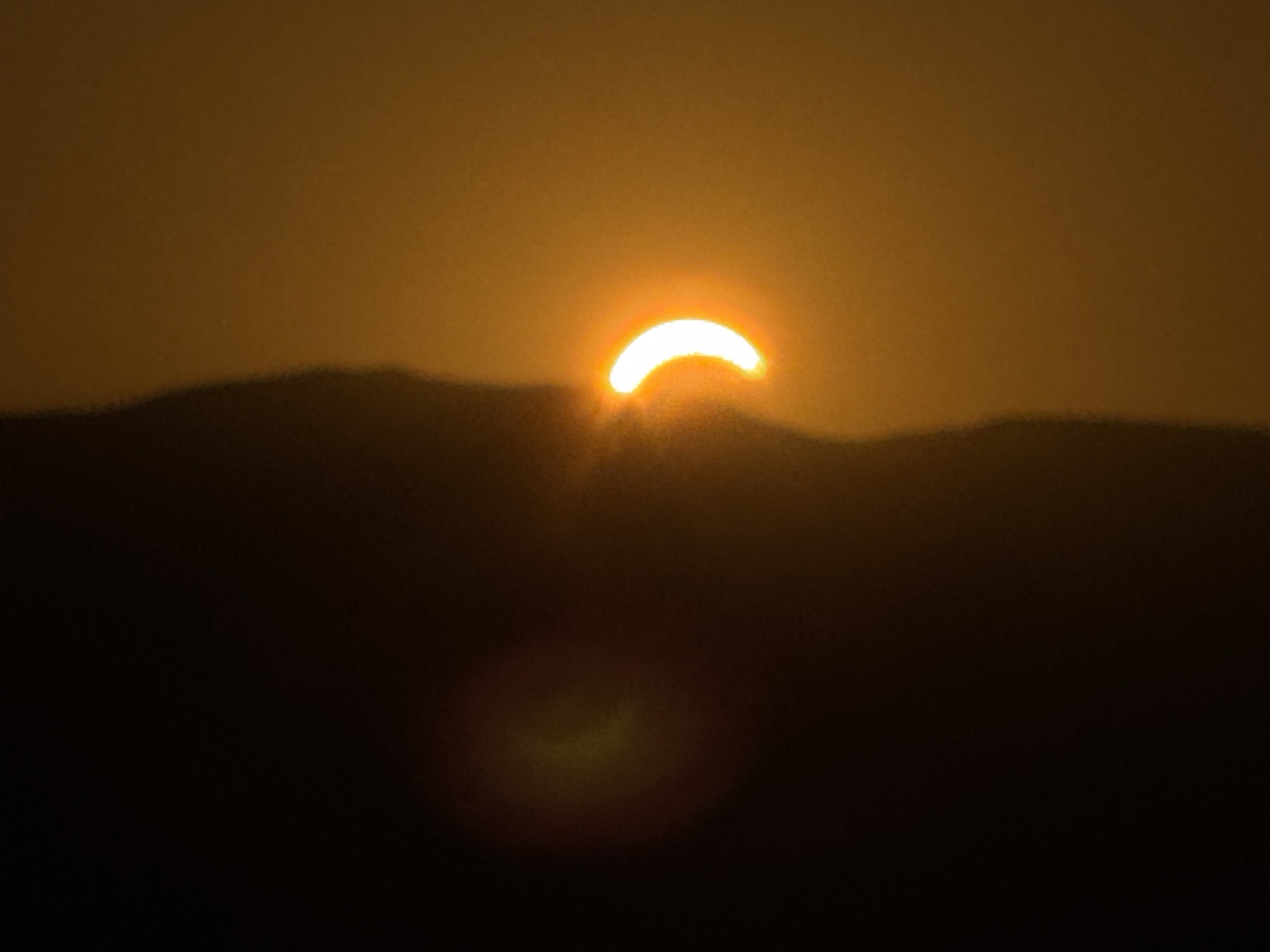
A partial solar eclipse over the Jura Mountains, observed from Geneva.
On the evening of 12 August 2026, a remarkable event unfolded above the Jura Mountains. From a familiar window in the Geneva area, an observer watched the Moon pass in front of the setting Sun.
It was a partial solar eclipse from Geneva, although the same eclipse was total along a narrow path elsewhere in Europe. The Moon did not completely cover the Sun at this observing location. Instead, the solar disc appeared progressively obscured as it moved toward the mountain skyline.
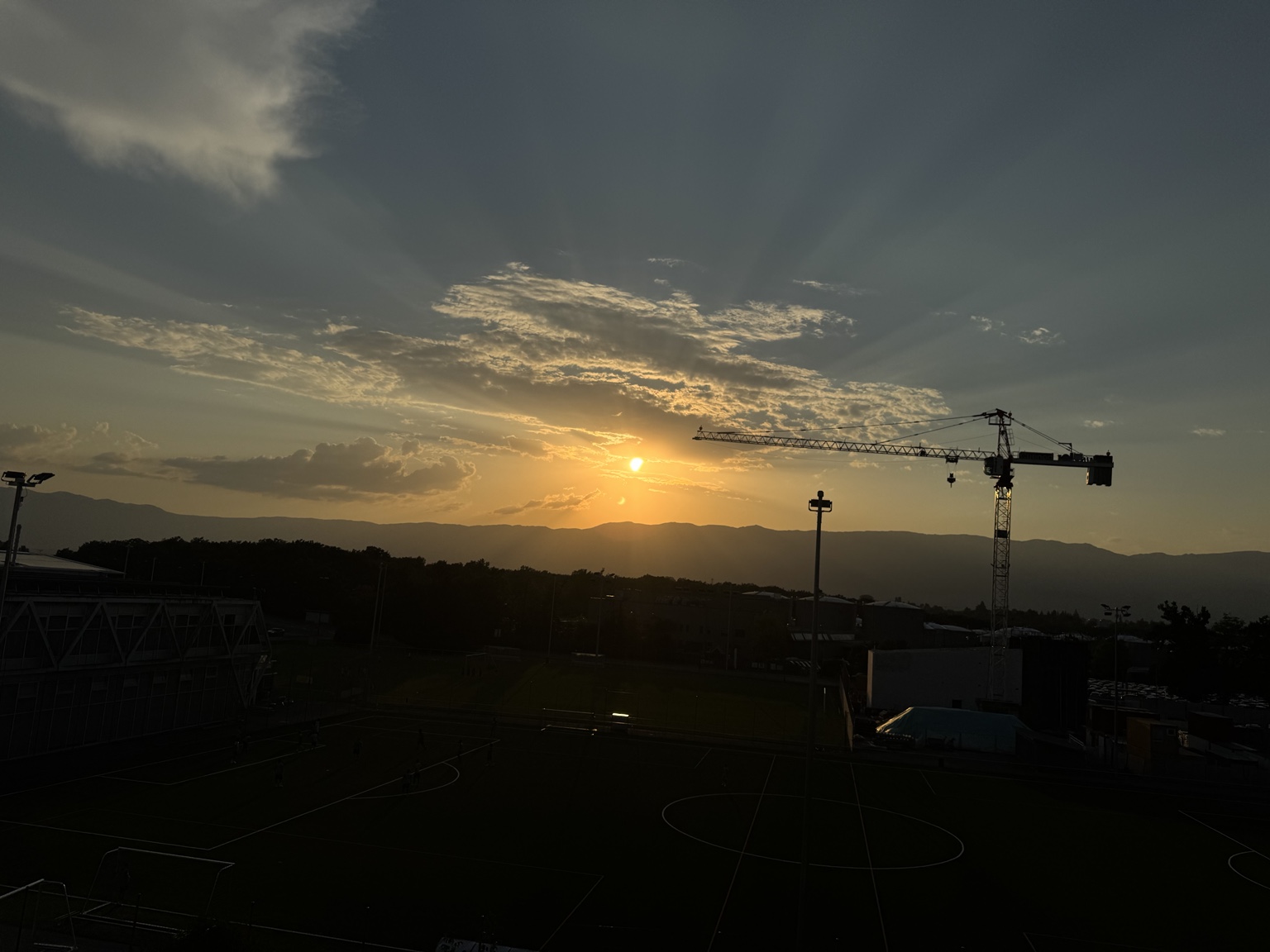
A celestial alignment at sunset
A solar eclipse happens when the Moon passes between Earth and the Sun at new Moon. Because the Moon's orbit is slightly tilted, this alignment does not occur every month. On this occasion, the alignment coincided with the final hours of daylight over western Switzerland.
The observer's journal records the partial eclipse beginning in Geneva at about 19:26 local summer time and reaching its calculated maximum at about 20:20. The calculated maximum obscuration was roughly 93%. These are location-based astronomical calculations, not measurements made from the photographs. The Sun set before the eclipse had finished.
What was personally observed: The Moon visibly crossed part of the Sun as the eclipsed disc approached the Jura ridge. Cloud cover and the late-evening light made this both an astronomical observation and a photographic challenge.
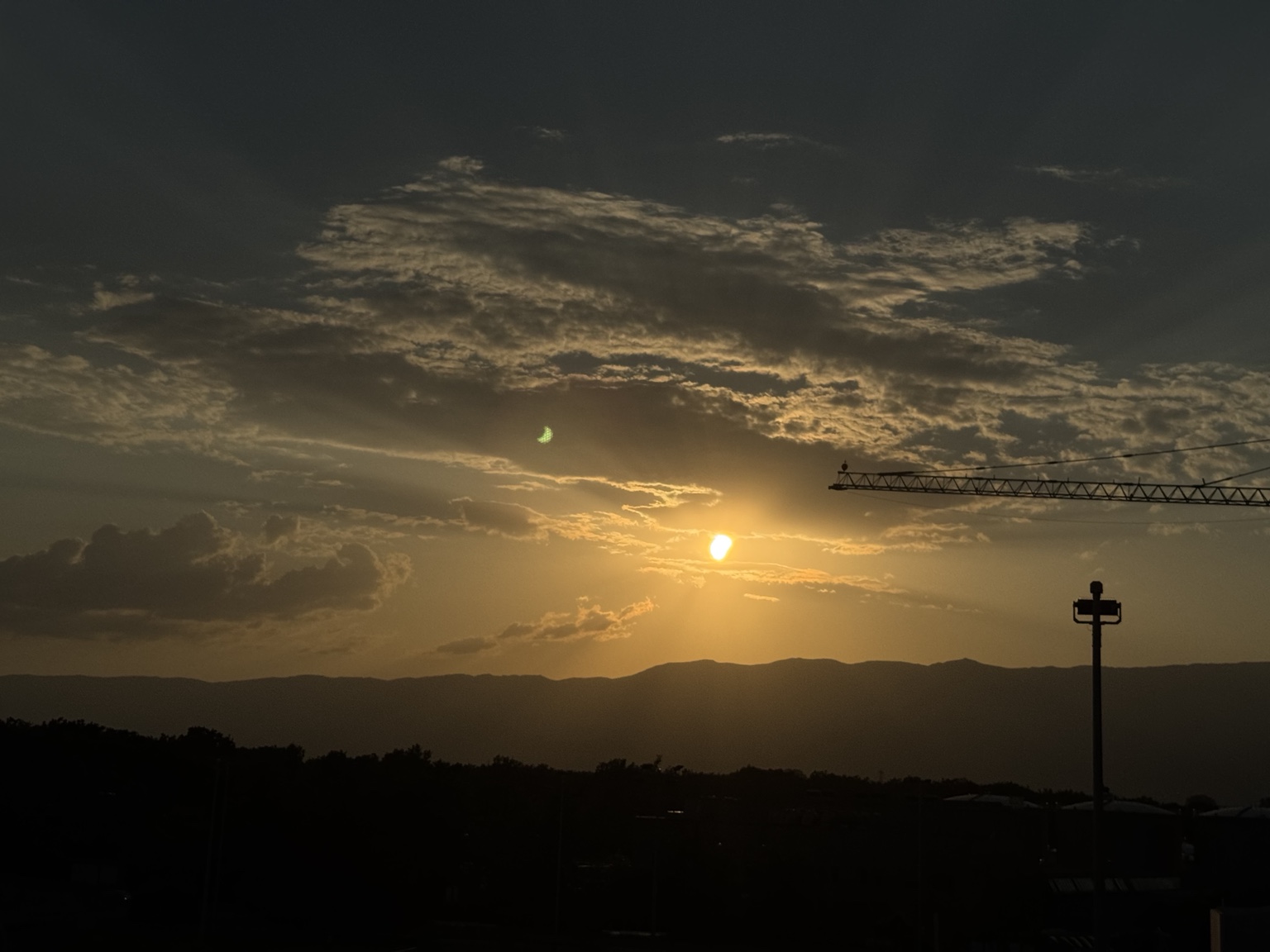
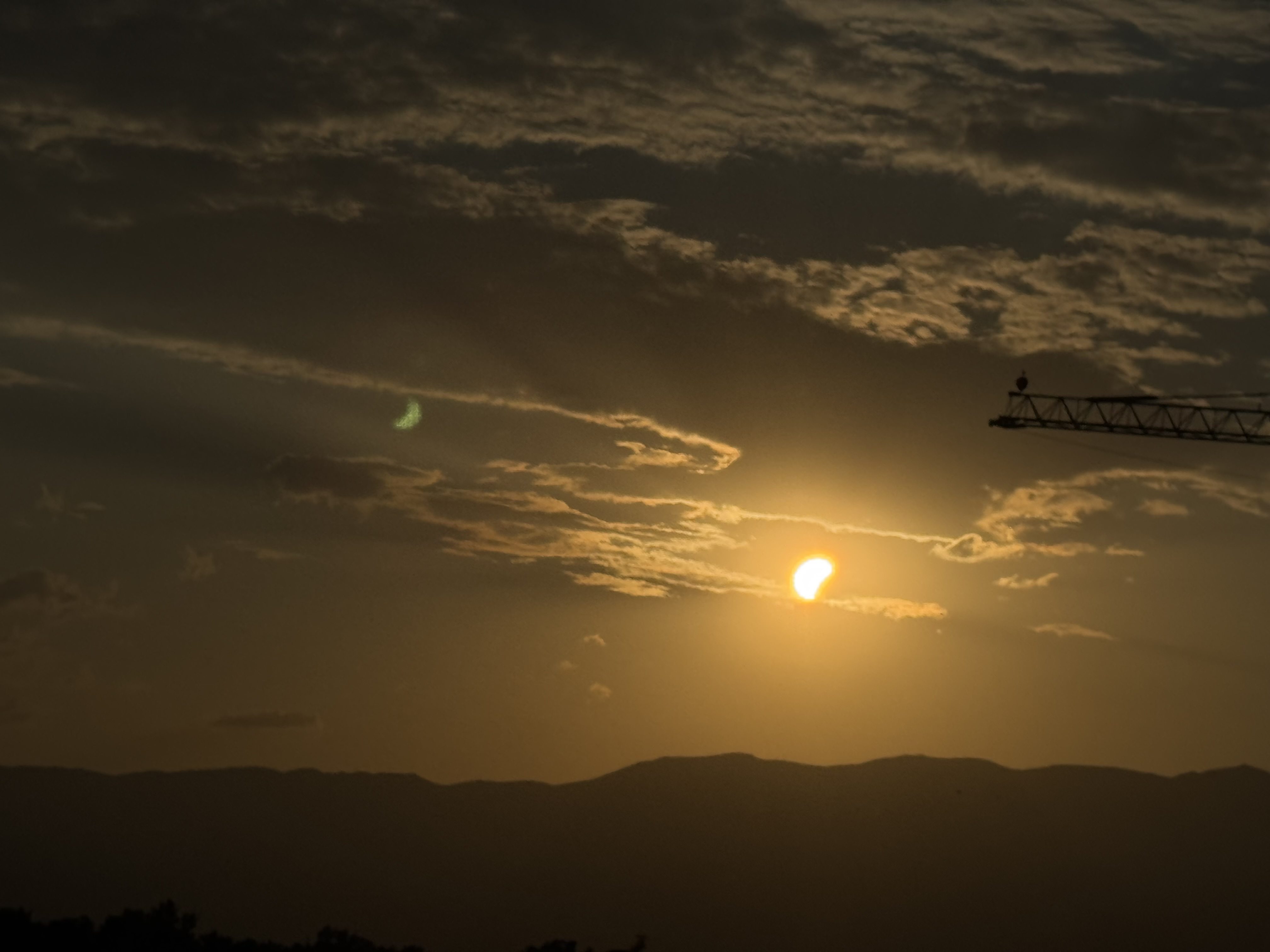
Why the Jura skyline mattered
The mountains formed a natural reference line, letting the observer follow the Sun's descent while its shape was changing. They also remind us of a useful distinction: the time the Sun disappears behind a local mountain is not necessarily the same as the calculated sunset time for an unobstructed horizon.
The episode became the starting point of the Jura Sky Journal—a record of how familiar skies can reveal unfamiliar astronomical events.
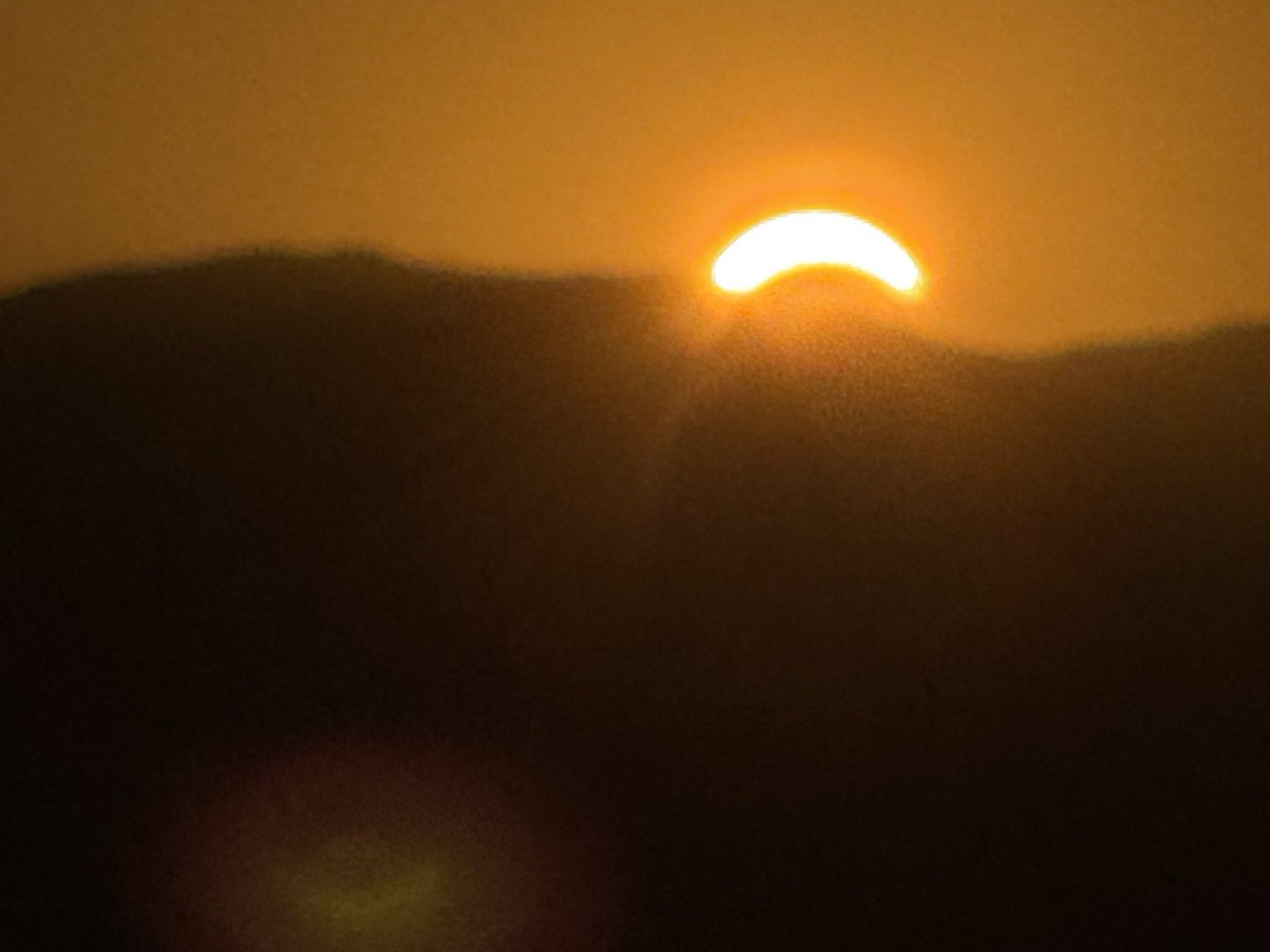
A moment worth recording
The lasting lesson of the evening was simple. An eclipse is not only something to read about or watch from a distant observatory. With careful preparation and safe equipment, it can be observed close to home—and the same window can become a place of continuing discovery.
Image provenance: These five photographs were extracted from the original eight-page illustrated Jura Sky Journal supplied by the observer. Their narrative sequence follows the journal, but individual capture times were not independently verified. Never look directly at the Sun or photograph it through optical magnification without appropriate certified solar protection.
Background reference: Timeanddate — Geneva eclipse circumstances, 12 August 2026.