
A valley that reveals itself slowly
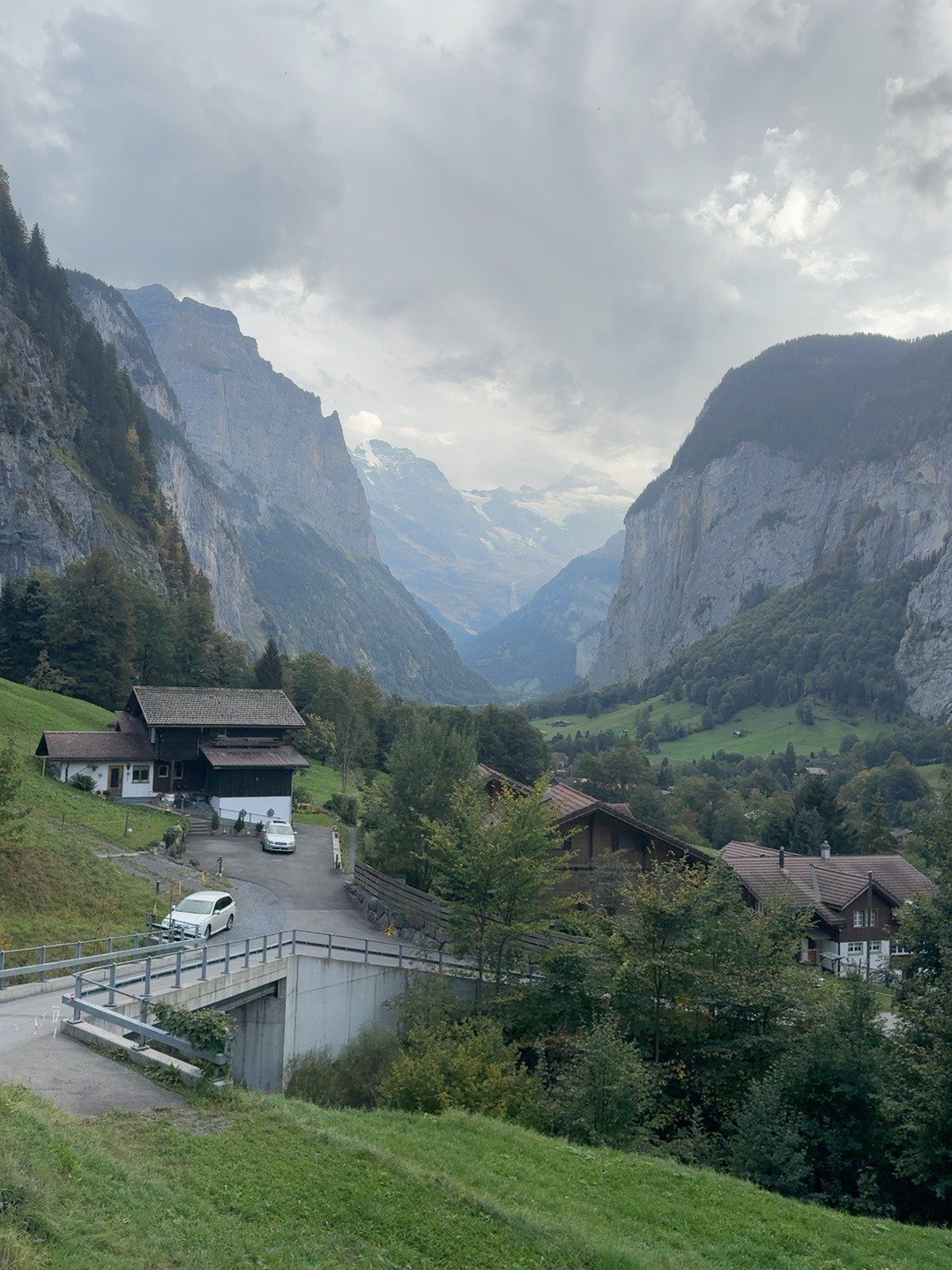
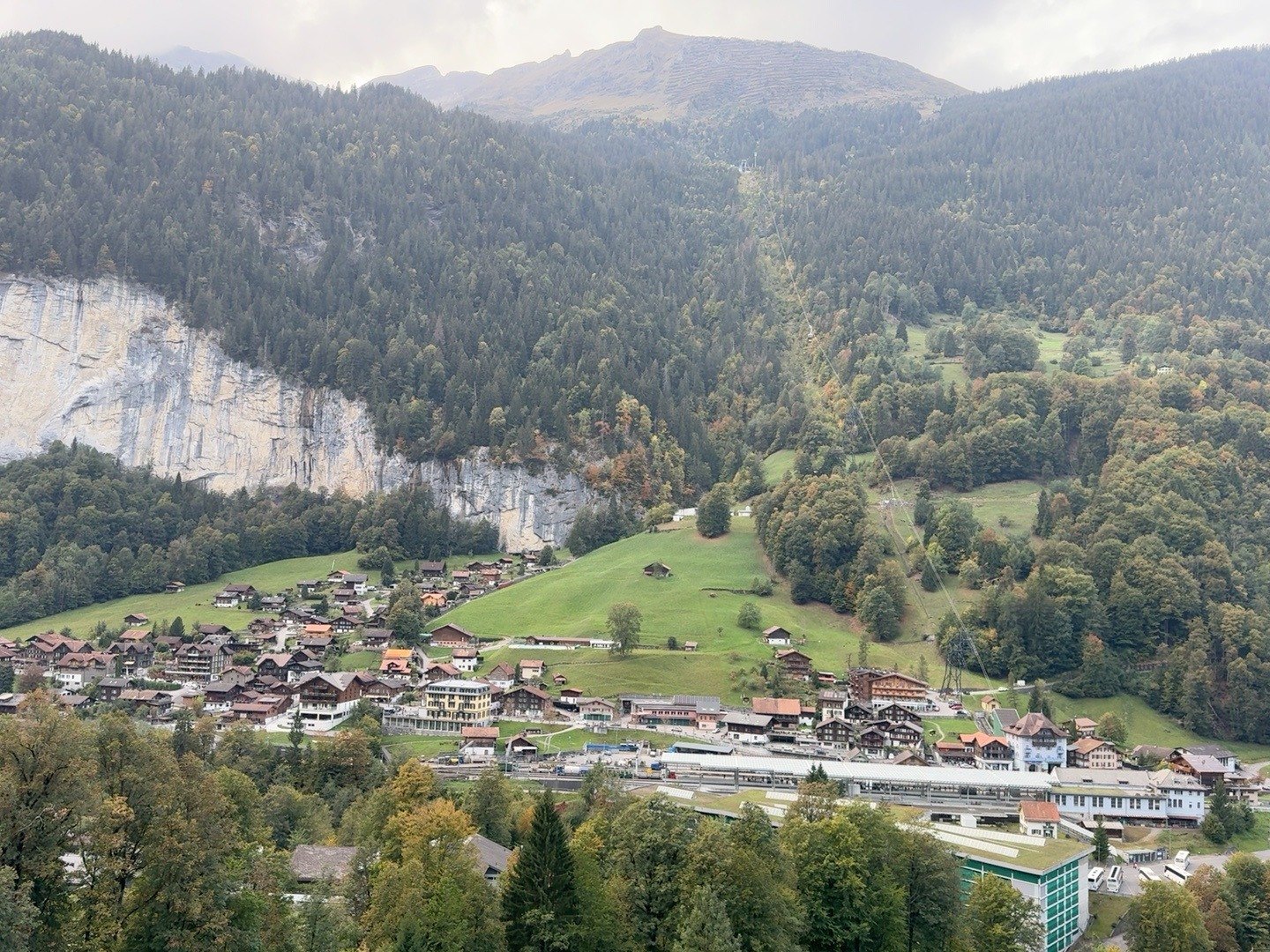
The approach from the Interlaken region into Lauterbrunnen is a lesson in changing scale. Wooded slopes, pasture and villages give way to immense limestone walls until houses and trees become reference points for understanding the cliffs.
The valley is not merely surrounded by mountains; it feels cut into them.
“Every few metres the valley seemed to say: no, this angle is better.”
Beneath the cliffs
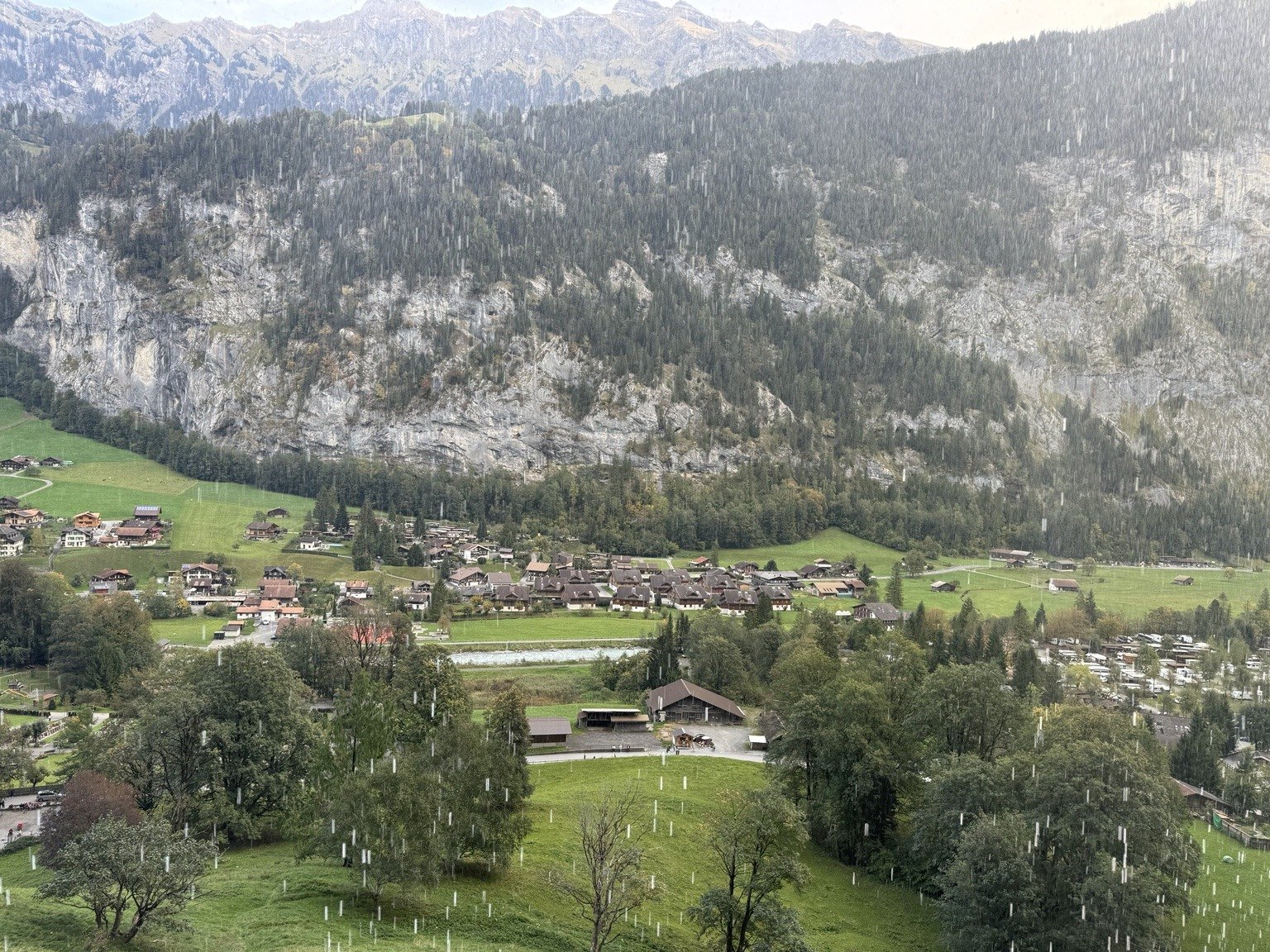
Traditional chalets, narrow lanes and flower gardens sit directly beneath exposed rock. Meadows occupy the valley floor while forest clings to ledges above. Human scale and geological scale share the same frame.
A river commonly cuts a V-shaped valley. A glacier fills a much larger cross-section and grinds against both floor and sides, producing the broad, steep-walled U-shaped trough so clearly visible here.
The river below
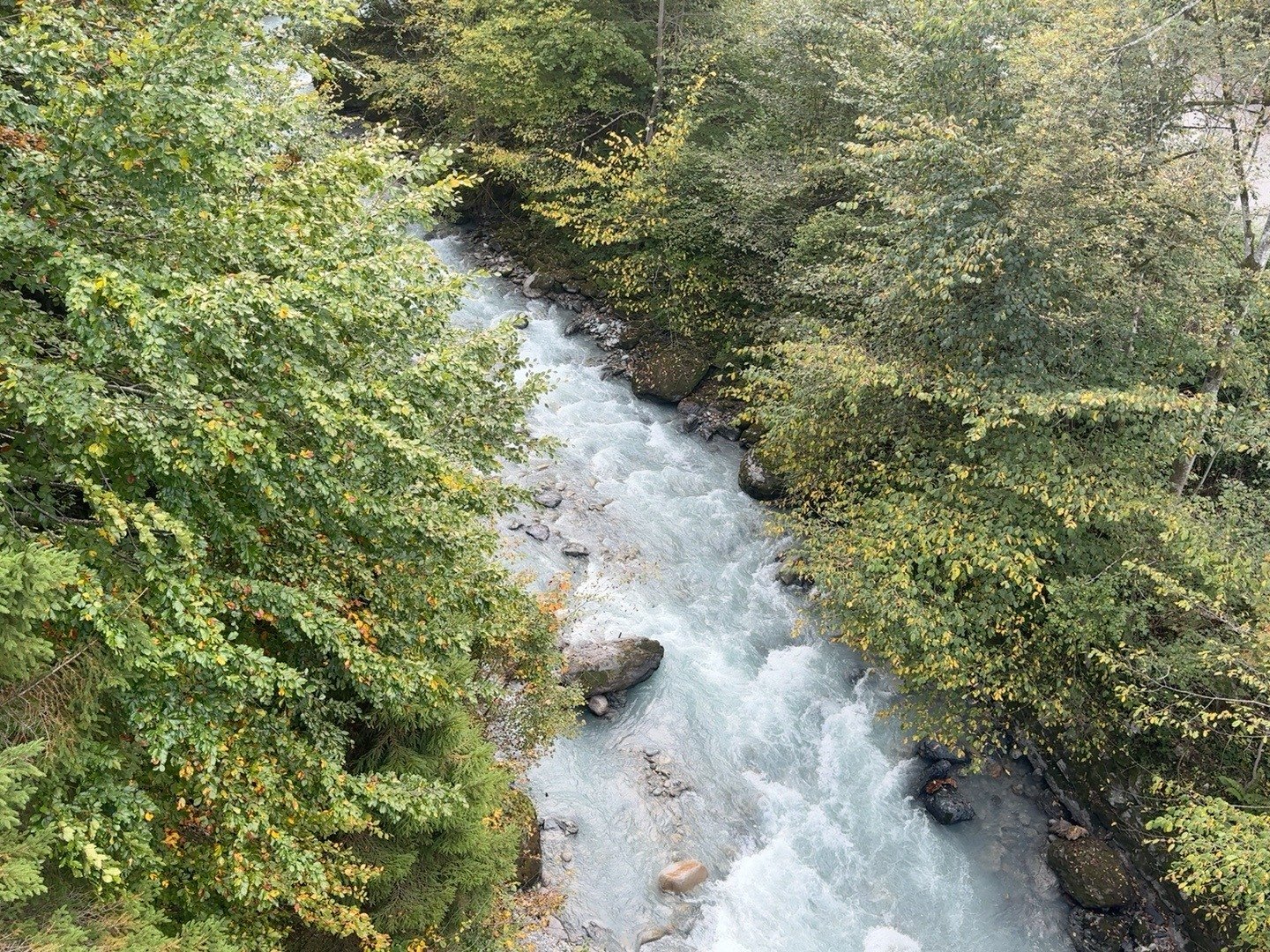
Water runs from snowfields and mountain basins, falls from hanging valleys, cuts through rock and gathers on the valley floor before continuing downstream through the Weisse Lütschine.
The pale blue-grey colour of alpine water often comes from extremely fine suspended rock particles — glacial flour — which scatter light.
Behind the waterfall
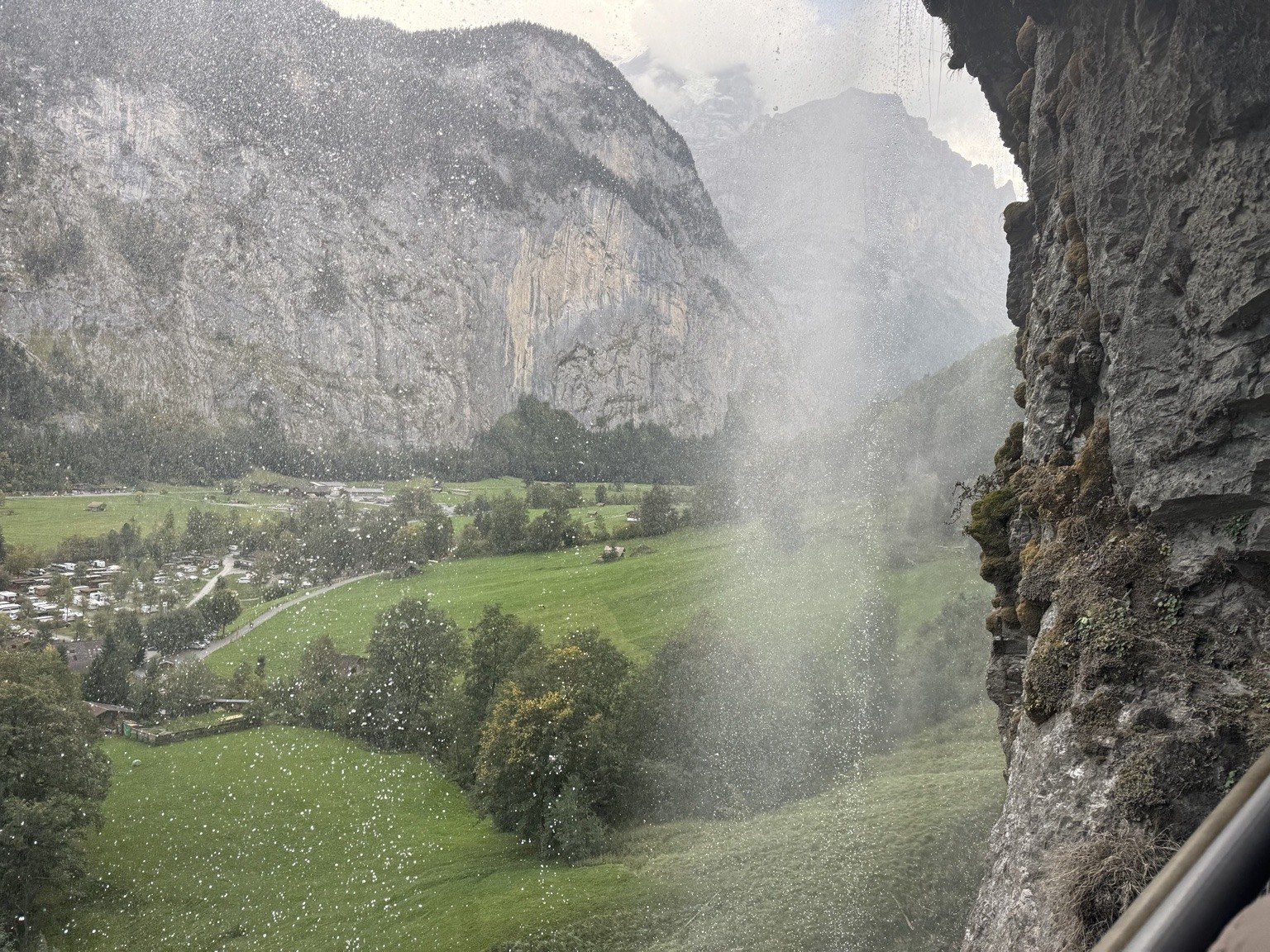
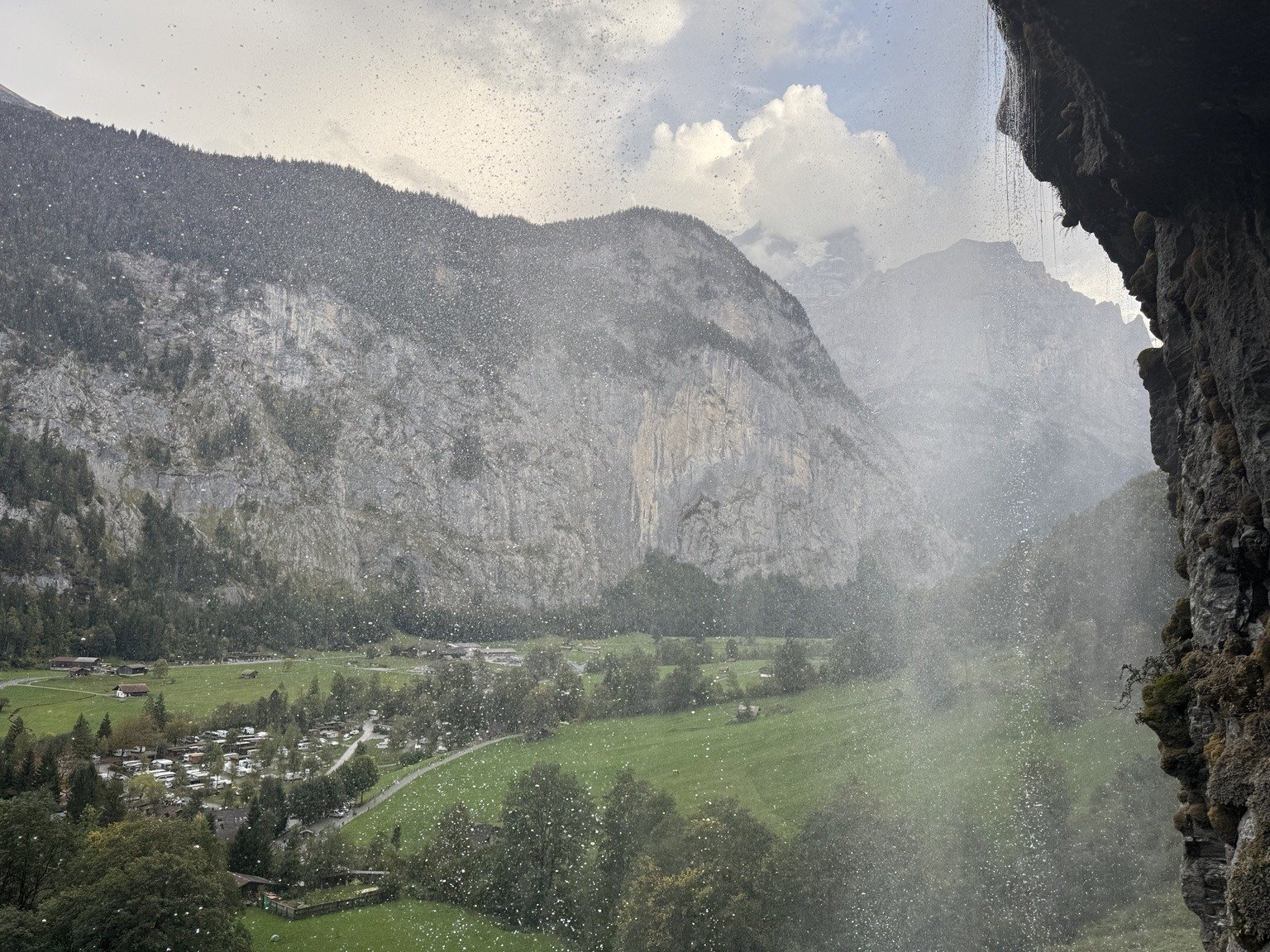
From the valley, Staubbach is a delicate ribbon. From the rock gallery behind the lower fall, it becomes a moving curtain of droplets through which fields, houses and the opposite cliff appear in fragments.
After such a long descent, much of the flow has been broken apart by air and wind. Near the observer it is mist, spray and scattered droplets rather than one solid sheet.
Why does such a tall waterfall look so light?
Height and water volume are different properties. The cliff determines the drop; the stream’s catchment, weather, snowmelt and season determine how much water reaches the edge.
A very tall waterfall can carry modest discharge. During the long fall, wind and turbulence then spread the stream into spray, making it look finer still.
The waterfall inside the mountain
Nearby Trümmelbach Falls is the counterpoint to Staubbach. Instead of dispersing into open air, powerful alpine water is concentrated through narrow gorges, caverns and channels inside the mountain.
If Staubbach is a veil on the face of the valley, Trümmelbach feels like the machinery hidden behind it.
An unexpected llama on the hillside
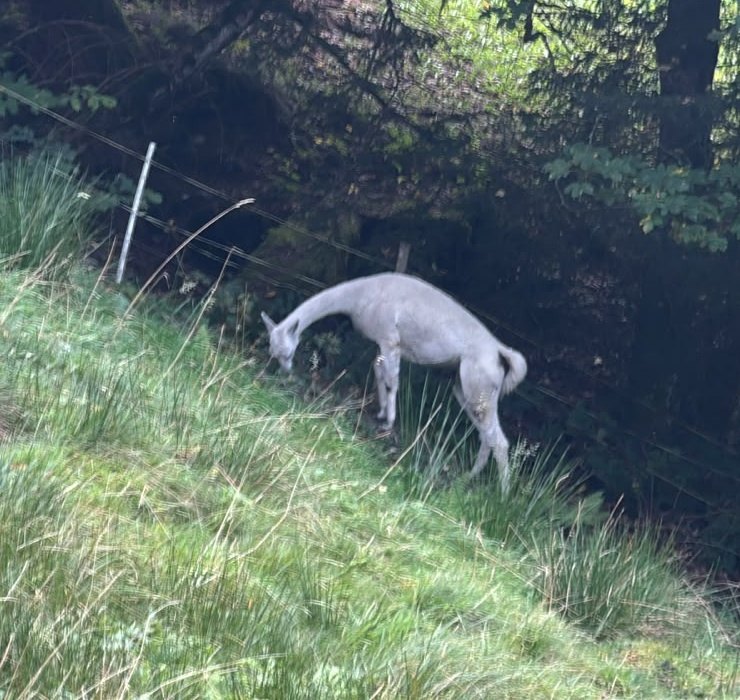
Amid waterfalls, cliffs and alpine pasture came a quieter surprise: a pale, recently shorn camelid grazing beside the trees. Its proportions appear more llama-like than alpaca, although a single photograph cannot make the identification absolute.
Llamas and alpacas are not native Swiss wildlife, but both are kept on Swiss farms. The sighting became part of the human landscape of the valley — and a reminder that small encounters can become some of a journey’s most memorable details.
Observation record
This visit became more than a collection of photographs. It became a study in scale — cliffs beside houses, a nearly 300-metre fall carrying comparatively little water, and mountain processes continuing long after the glaciers that carved the valley retreated.
Lauterbrunnen: a place where the landscape does not merely ask to be photographed; it asks to be understood.