The Moon That Disappeared Behind the Jura
An October morning, a fleeting Moonset, and an unexpectedly beautiful view.
On the morning of 26 October 2026, a rare break in the autumn cloud offered a view across the Jura Mountains. From the same window that had framed August's solar eclipse, the observer watched for the Moon as it descended toward the ridge.
The photograph came just after the hoped-for moment. By the time the camera recorded the scene, the Moon was no longer clearly visible. Yet the images preserve something valuable: the conditions, the horizon and the changing morning light in which the observation took place.
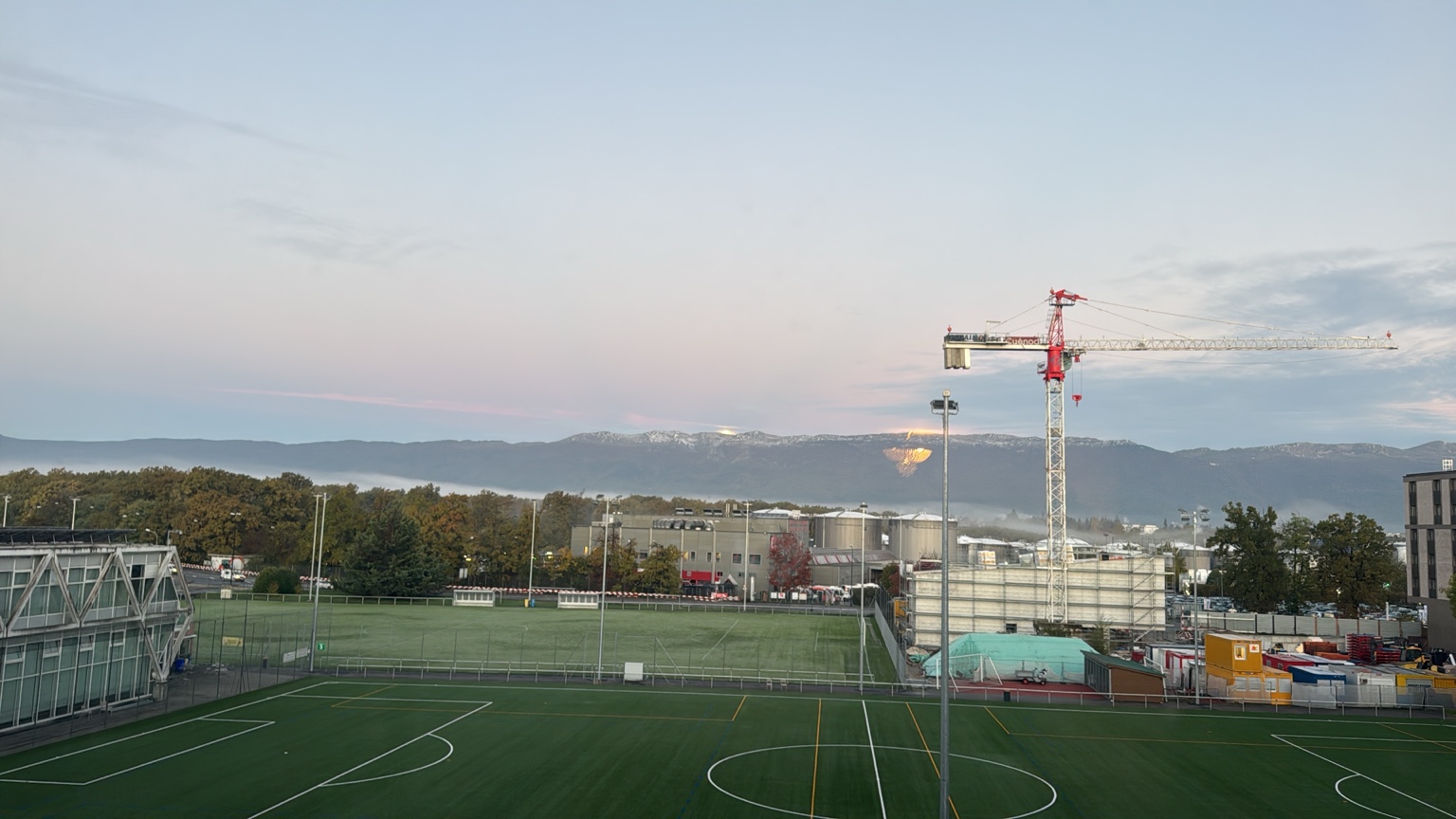
An unusually clear October morning
Clear skies can be elusive during Geneva's autumn. On this morning, stretches of pale blue and pink-grey sky opened above the mountains, while the foreground landscape remained subdued in the early light.
That contrast gave the photographs their character. They are not close-up portraits of the Moon; they are a record of the place where an observer had just been watching for it.
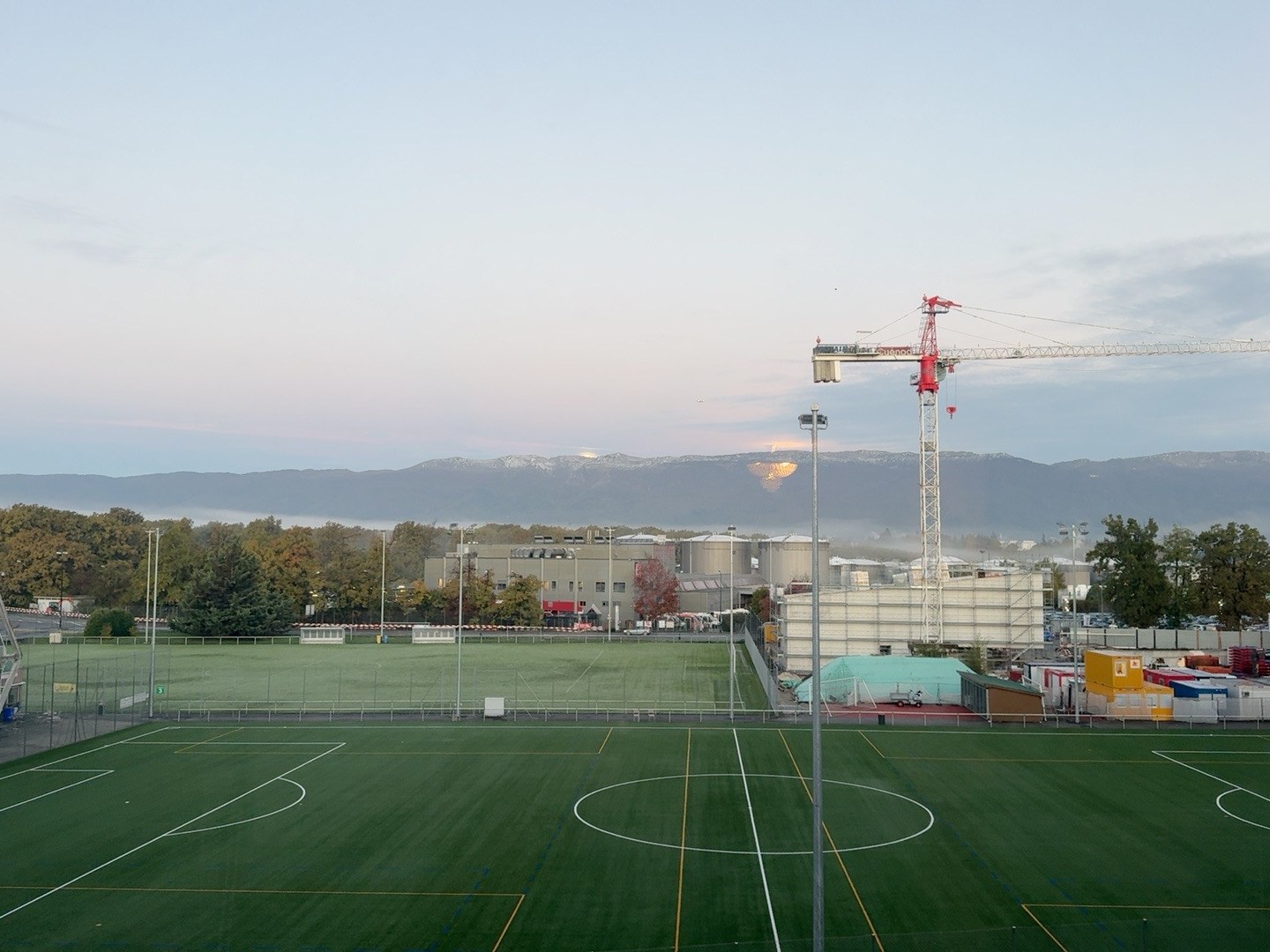
Why the Moon doesn't always set where the Sun does
The Sun's sunset position shifts gradually through the seasons, owing mainly to Earth's tilted axis. The Moon's setting point also changes, often much more rapidly, because the Moon is moving around Earth and its orbital plane is tilted relative to Earth's path around the Sun.
From a fixed window, the same mountain peaks can therefore frame a solar eclipse in August and a quite different lunar path in October.
Observation versus certainty: The observer reported watching for the setting Moon and photographing the sky just afterward. The lunar disc cannot be confidently identified in these supplied photographs. The exact local Moonset time and direction have not been independently verified for this journal entry.
The beginnings of a sky observatory
The observation suggested a simple long-term project: photograph the Jura skyline repeatedly from the same position, noting the date, time, weather and object being observed. Over months, those records can reveal patterns that are easy to overlook in everyday life.
Sometimes the most interesting astronomy photograph is not the one that captures the object perfectly. It is the one that inspires a better question for the next clear morning.