From Crimson Clouds to the Last Light
An evening of colour, clouds and changing light above the Jura Mountains.
On 1 November 2026, the western sky above the Jura Mountains offered an unexpectedly rich display after sunset. From the familiar observation window in Geneva, the light changed from pale gold to orange, crimson and finally the muted colours of evening.
Unlike the solar eclipse in August or the attempted Moonset photograph in October, this was not a rare celestial alignment. It was an everyday event worth examining closely: the gradual disappearance of sunlight and the colours left behind.
A landscape transformed by light
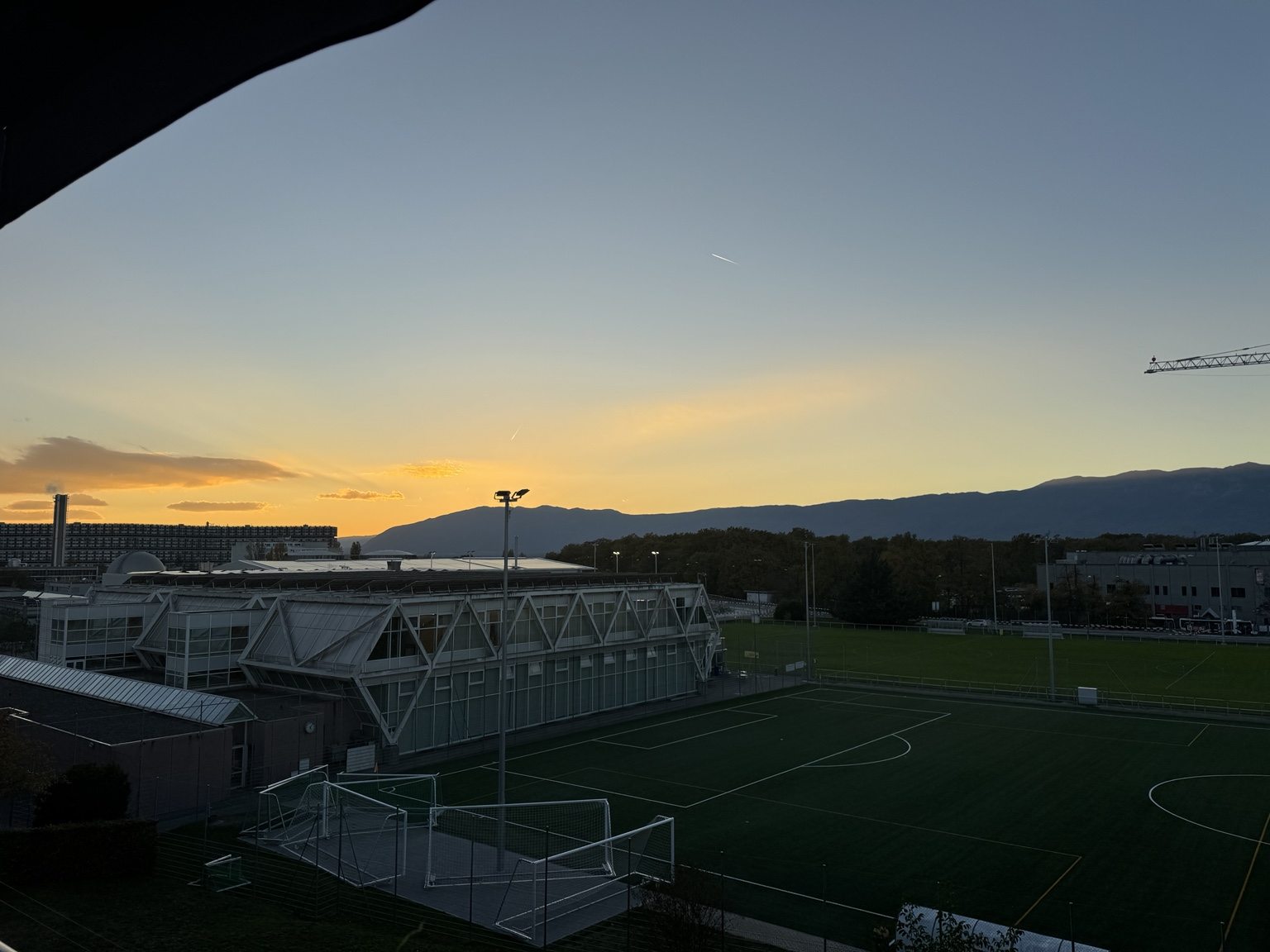
The first views revealed a bright yellow-orange band above the Jura ridge, while the sports grounds and buildings in the foreground were already darkening. Low clouds interrupted the otherwise clear sky.
When the clouds turned crimson
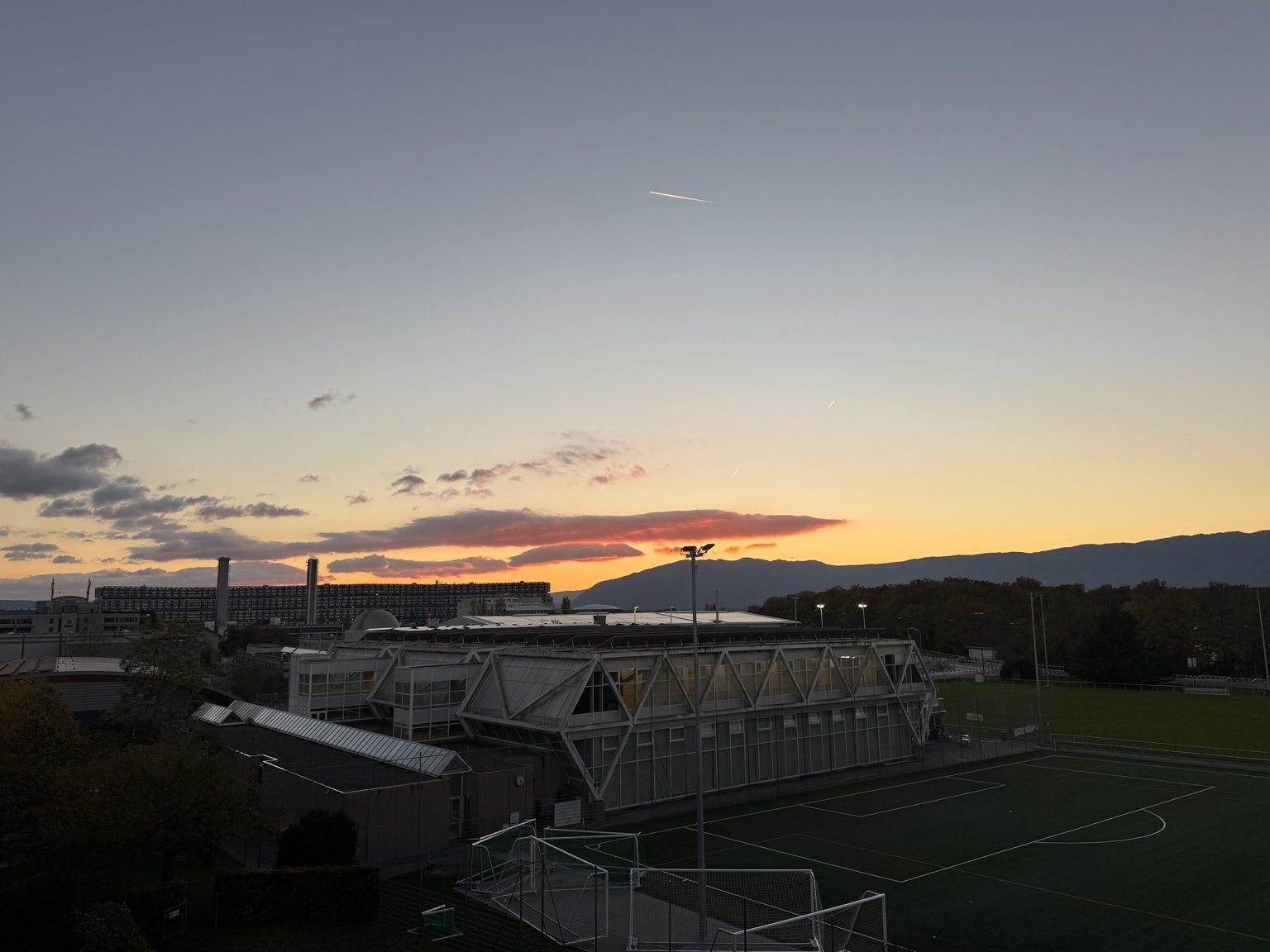
As the sequence continued, the clouds above the western ridge took on deep reds and pinks. At low solar angles, light passing through a longer atmospheric path is depleted of much of its shorter-wavelength blue component. The warm colours that remain can illuminate clouds even after the Sun is no longer visible from the observer's position.
The last light of twilight
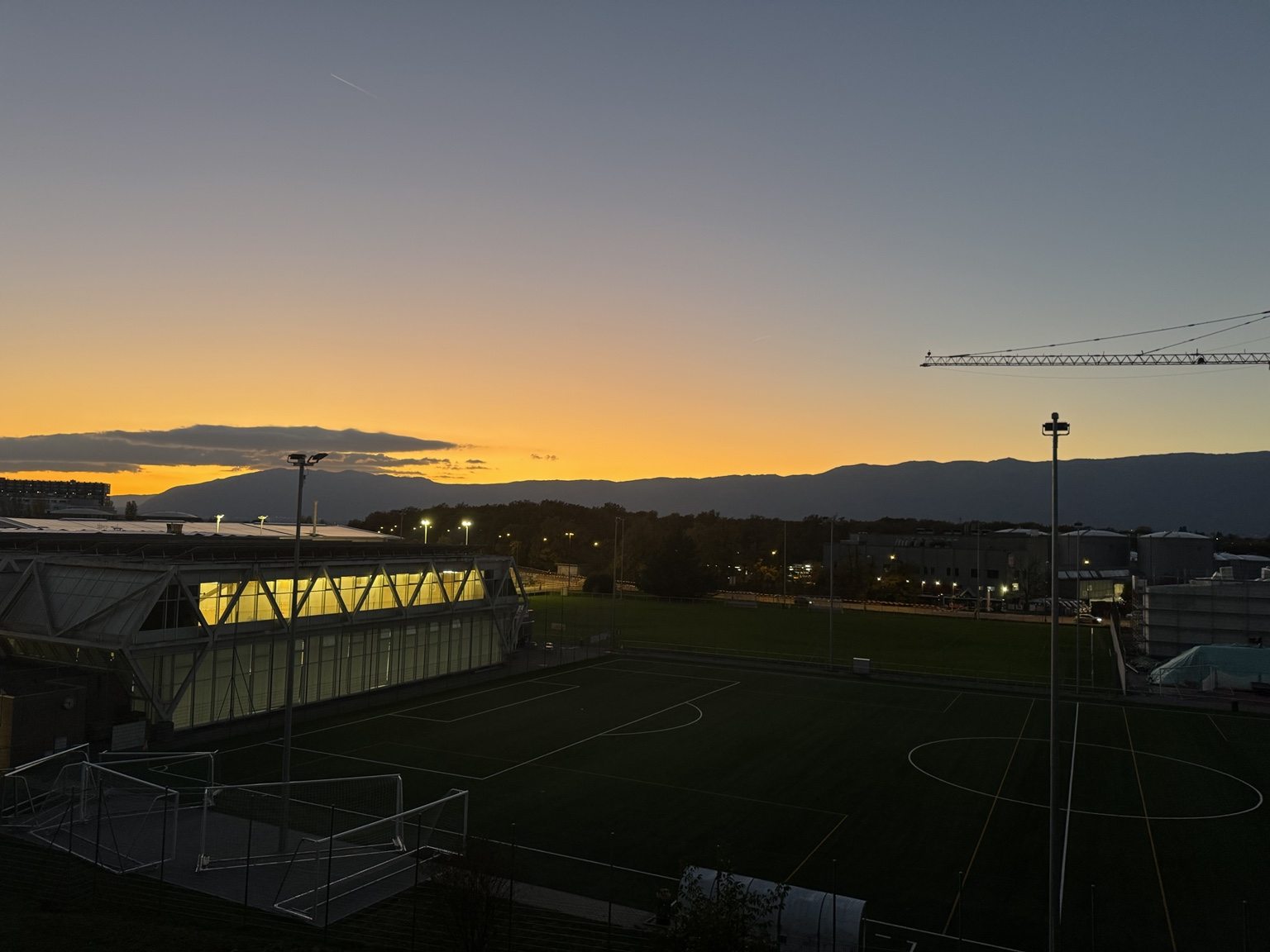
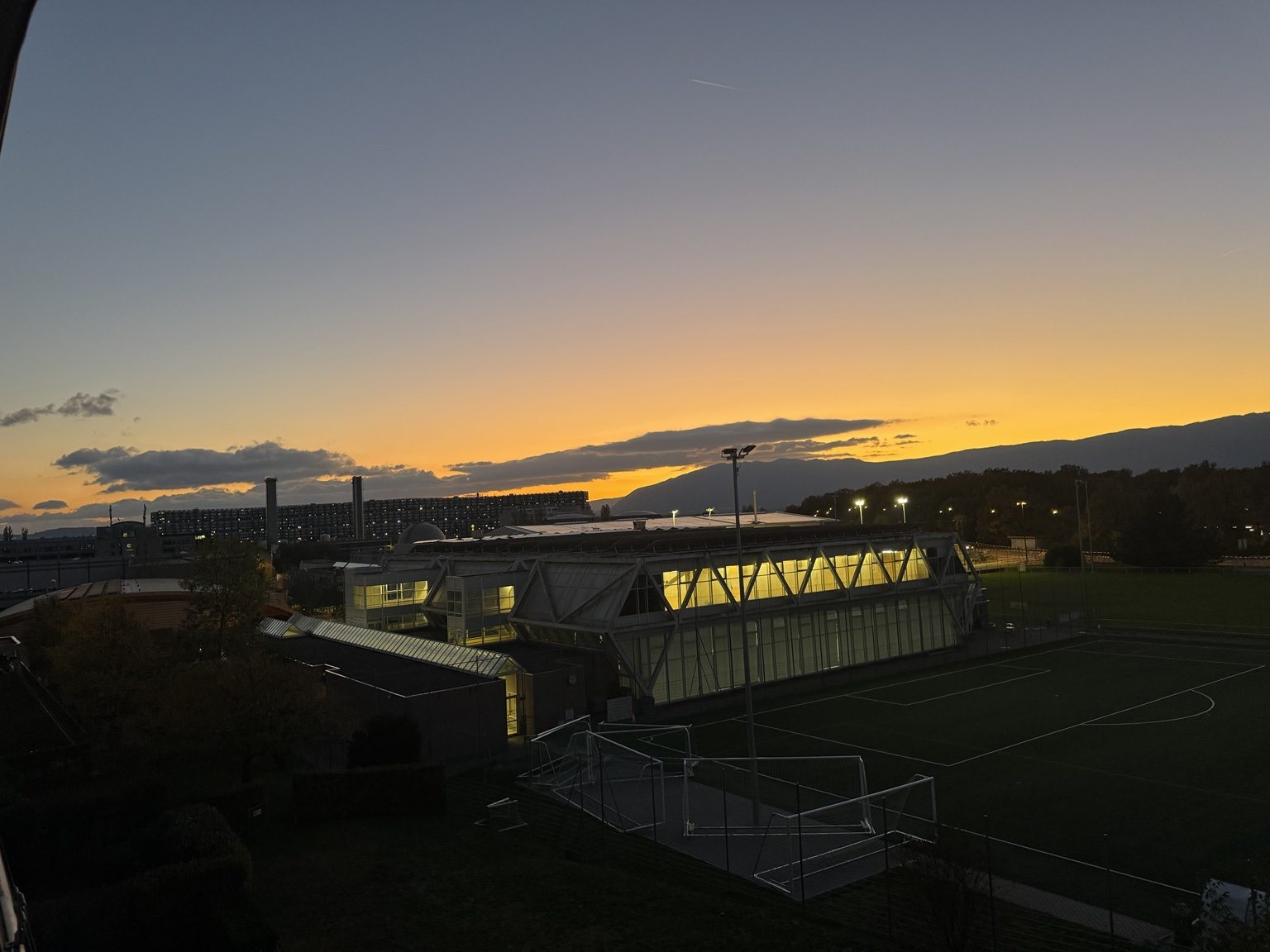
Later photographs show the clouds losing their intense red colour as the remaining glow settled close to the horizon. The windows of the sports facility, floodlights and other artificial lights became increasingly conspicuous in the foreground.
Why the sunset and Moonset were in different places
The same mountain skyline has now framed three observations: August's partial solar eclipse, October's setting Moon and November's sunset. Their different positions along the ridge offer an invitation to investigate the motions of the sky.
Because Earth's axis is tilted, the Sun's setting position gradually shifts north and south over the course of the year. The Moon's setting position also changes, but on a faster schedule because it orbits Earth and follows a path inclined to the apparent path of the Sun. The photographs alone do not establish precise setting bearings: that would require a calibrated camera direction and the original observation times.
Field-record distinction: The photographs show post-sunset atmospheric light and cloud colour, not the visible solar disc at the horizon. A bright area of sky does not by itself pinpoint the exact location where the Sun disappeared behind the mountains.
A repeatable observation
One practical idea now emerges for the Jura Sky Journal: photograph the same ridge from the same spot, at the same camera zoom, and note the exact local time. Over a year, those photographs could show the changing sunset position, the effects of weather on twilight and the different routes of the Moon across the sky.
Sometimes the most familiar view becomes the most revealing one, simply because someone remembers to look again.